
716 B
716 B
For a point rotating around an origin:
!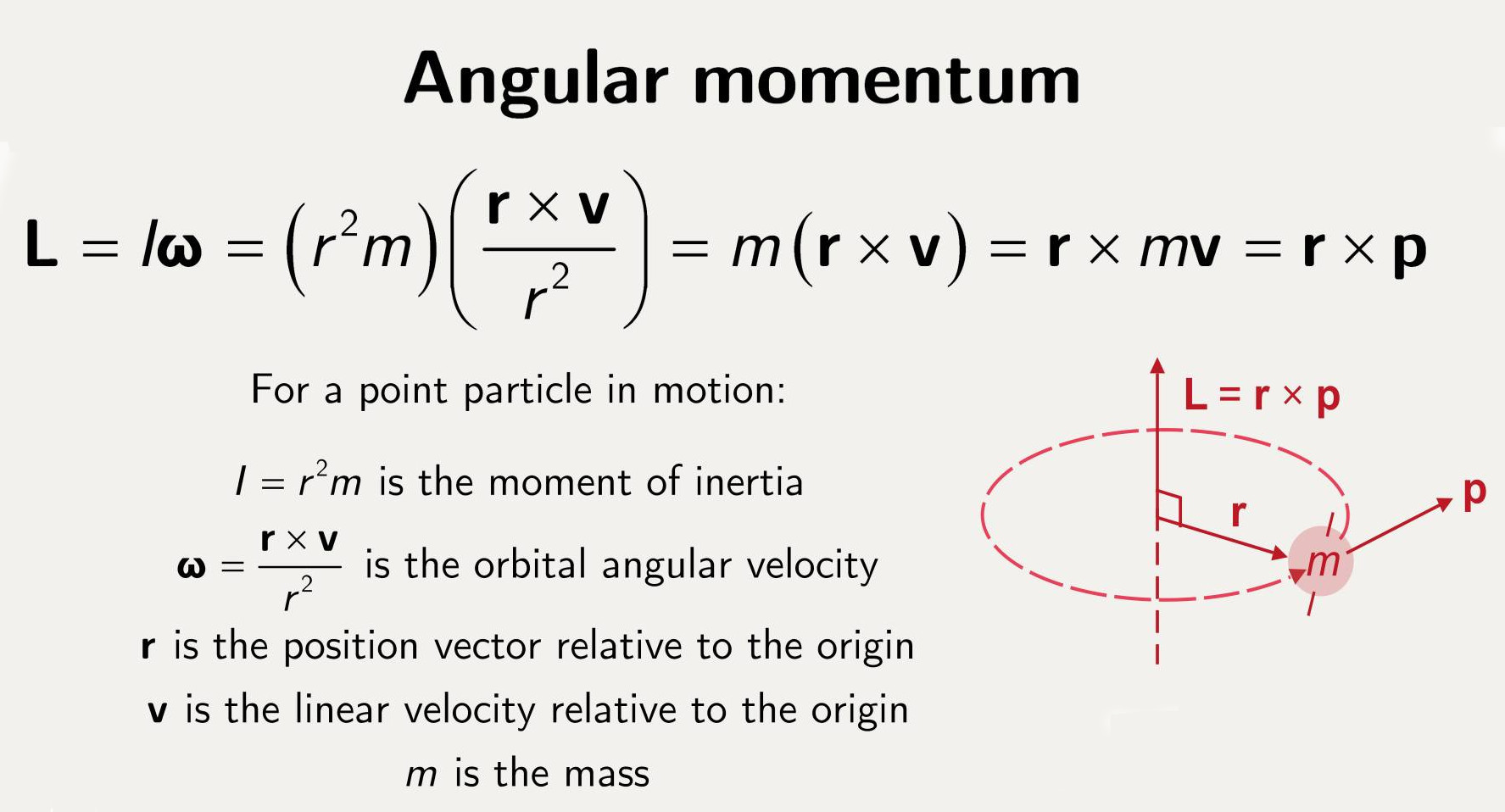 In the diagram the p vector is the momentum, i.e. the velocity times the mass.
Moment of inertia I is rotational mass
I = \sum mr^2- Large
I→ harder to start, stop, or alter rotation
- Small
I→ easier to change rotation
It depends on mass distribution, not just mass:
Mass farther from the axis increases I greatly.
Gyroscope connection:
L=I\omegaBigger I → larger angular momentum at the same spin rate → harder to tilt or redirect.
Can be thought of as: moment of inertia helps determine how “stubborn” a spinning object feels.